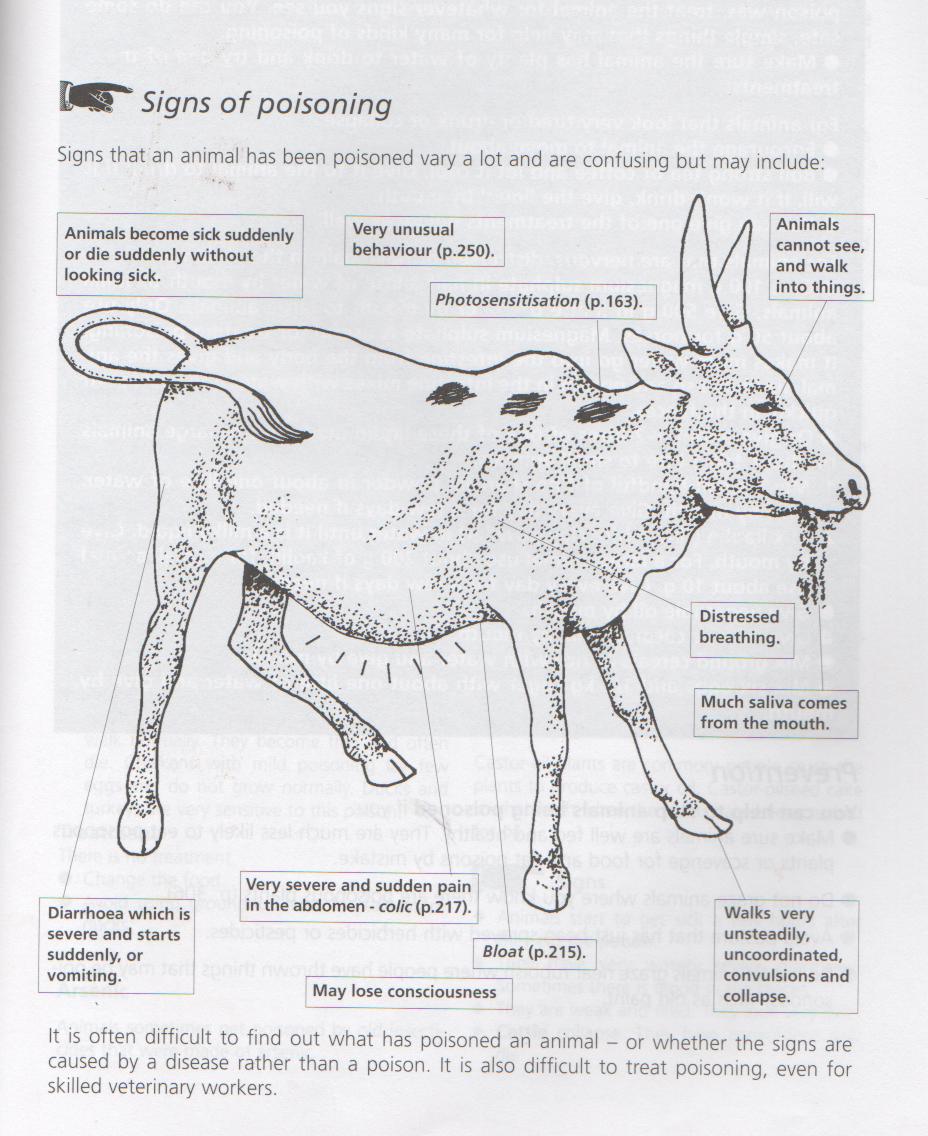
Plant poisoning is usually difficult to diagnose. Different plants act in different ways and therefore produce different symptoms. Diagnosis often has to rest on the history as frequently symptoms and lesions are rarely characteristic. The fact that animals had access to a particular plant or been seen to be eating it, the presence of identifiable fragments in the stomach and the fact that the animals were strangers to the district should be taken into consideration when attempting to reach a diagnosis.
It should be noted that most plants with yellow flowering heads are toxic to stock but, unless the grazing is very sparse, they will avoid eating them.
Some plants are poisonous at certain stage of growth and not at others. For example potatoes are particularly poisonous after they have turned green on exposure to light. Certain parts of a plant may be safe to eat while other parts may not be safe.
- Prevention of plant poisoning
- General diagnosis of plant poisoning
- Aflatoxin
- Other causes of plant poisoning